Nobel Prize in Medicine honours the scientists who made neurons obey light
Karl Deisseroth, Peter Hegemann and Georg Nagel share the 2026 award for light-gated ion channels and optogenetics, a tool now used in brain labs worldwide
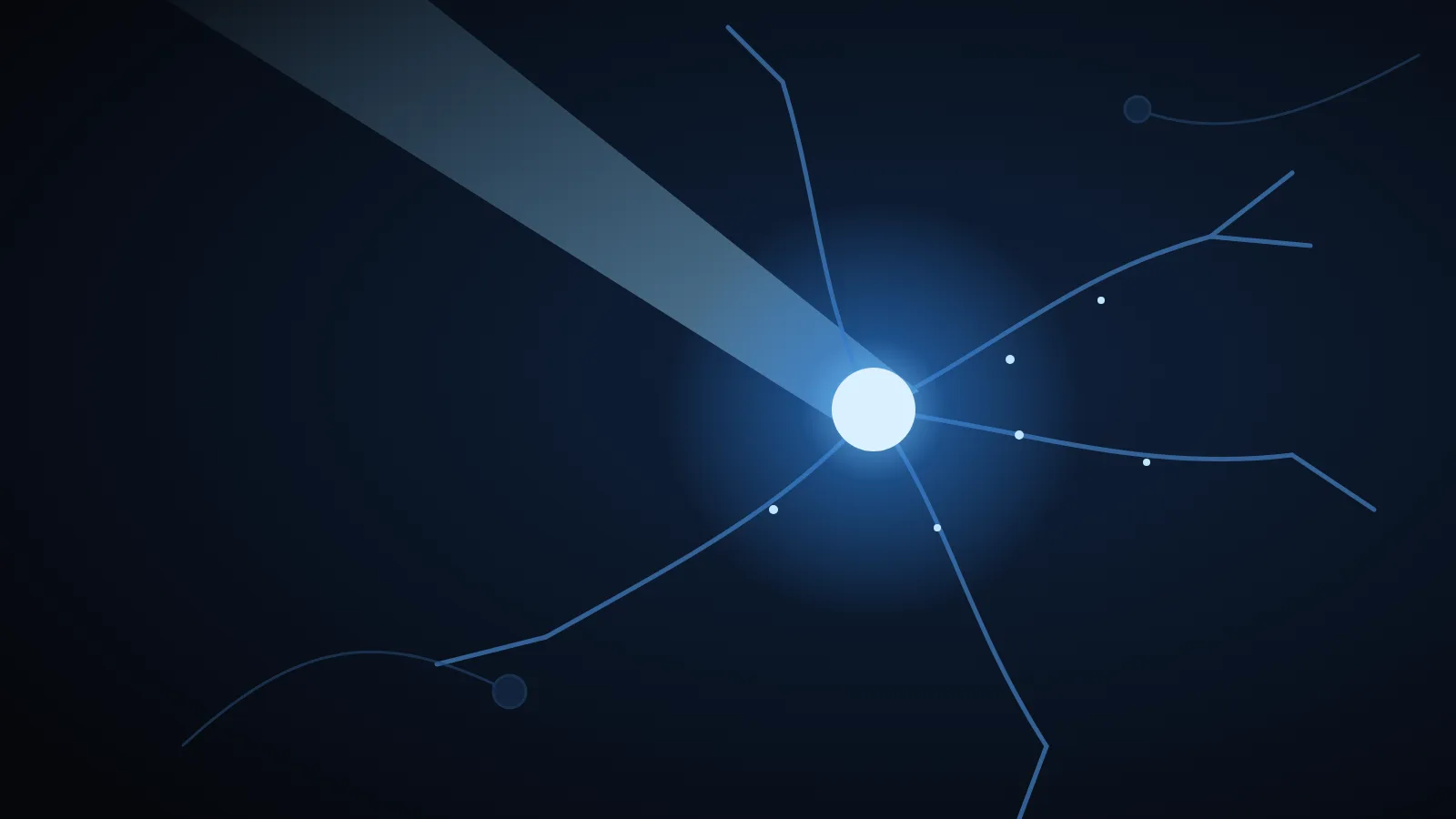
The 2026 Nobel Prize in Physiology or Medicine was awarded to Karl Deisseroth, Peter Hegemann and Georg Nagel for discovering light-gated ion channels and developing optogenetics, a method for switching individual neurons on and off with light.
Three scientists whose work lets researchers switch brain cells on and off with flashes of light were awarded the 2026 Nobel Prize in Physiology or Medicine on Monday.
The prize goes jointly to Karl Deisseroth of Stanford University, Peter Hegemann of Humboldt University of Berlin and Georg Nagel of the University of Würzburg, for discoveries concerning light-gated ion channels and the development of optogenetics.
From green algae to the brain
The story starts in single-celled green algae, which sense light through proteins in their membranes. Hegemann's laboratory identified channelrhodopsin-1, the first known light-gated ion channel. Nagel's team then described channelrhodopsin-2, a version whose properties turned out to be far better suited to controlling nerve cells.
Deisseroth took the next step. In a 2005 paper in Nature Neuroscience, his group showed that neurons from mammals, once made to produce channelrhodopsin-2, could be made to fire on command, with millisecond precision, by pulses of blue light. By 2007 the method was working in the brains of living mice.
Why it matters
Before optogenetics, scientists could watch brain activity but had few ways to control a single, defined type of neuron without affecting its neighbours. The new tool let them ask causal questions: which circuit drives a specific behaviour, a memory or a disease state.
mapping the brain in a way that we could once only dream of
the Nobel Committee, as quoted by HHMI
Researchers have also explored medical uses. In one line of work, a viral vector delivered channelrhodopsin-2 to cells in the retina and restored a response to light in a mouse model of retinitis pigmentosa, an inherited form of blindness.
The laureates
Deisseroth, a psychiatrist and bioengineer, has been a Howard Hughes Medical Institute investigator since 2014; the institute said he is the 36th current or former HHMI scientist to receive a Nobel Prize. Hegemann and Nagel are biophysicists whose research on algal photoreceptors laid the foundation for the field.